Meet Your Digital Twin

TABLE OF CONTENTS

This might sound a little too Black Mirror to be real, but the truth is that 'Digital Twins' are no longer sci‑fi—they’re real and they perfectly reflect the direction technology is heading. The Digital Twin concept started as the extremely accurate reproduction of real‑world human beings and things in cyberspace. Human‑Digital Twins go even further, by replicating not only the outer aspects of a human being, such as physical and physiological characteristics, but also inner qualities such as personality, sensibilities, thoughts, and skills.1 Historically, tech brands have centered their visual efforts on showing technology as a tool, something Getty Images' VisualGPS analysis reflects. But now, we’re entering a whole new era; one where technology doesn’t just cater to us but starts to look and feel like us.
Think about using an Apple Watch or an Oura Ring to track your health data, 23andMe to explore your DNA ancestry, or even ChatGPT to help solve your everyday...everything. These systems are all creating a digital version of ourselves, whether it’s a map of how our body functions, a breakdown of our genetics, or an algorithm that reflects how our mind works. The potential is undeniable, these technologies amplify human intelligence and help us understand and evolve in entirely new ways. Visualizing abstract concepts like these can be tricky, as they don’t always translate easily into the physical world.
Reimagining the future of tech
Technology visuals are heavily influenced by the future, with 'futuristic' ranking as the fifth most popular concept for visuals used by the Tech industry globally (making it more popular than themes like 'innovation' or 'cooperation'). And it’s not just the industry that's excited, consumers are, too: According to VisualGPS research, one in two people are excited to see what the future looks like as technology evolves. And this future feels closer than ever. With constant updates from companies like OpenAI letting us know how AI is changing the world, it’s no longer about distant possibilities, but more about how the world will change within the next year. This shift challenges the way we visualize the future, especially in tech. It’s no longer about robots and flying cars. Instead, the future of tech looks like today.
This aligns with the growing presence of the Digital Twin, the idea that who we are today is shaping and being mirrored by technology. Visually this means grounding futuristic concepts in the present. Choosing content that includes familiar settings, or identifiable figures can help bridge the gap, making abstract ideas feel more tangible and closer to our reality.


A conceptual approach
Visualizing new or abstract concepts can be challenging, but conceptual and abstract visuals are one of tech’s strongest allies. Compared to industries like Healthcare and Travel, the Tech industry relies more heavily on conceptual and abstract visuals. That’s because when it comes to explaining complex or intangible ideas, these type of visuals are especially effective at getting the message across.
As we look to visualize the future of technology, one that mirrors physical humans and our minds, these approaches can be the key to visuals that make an impact:
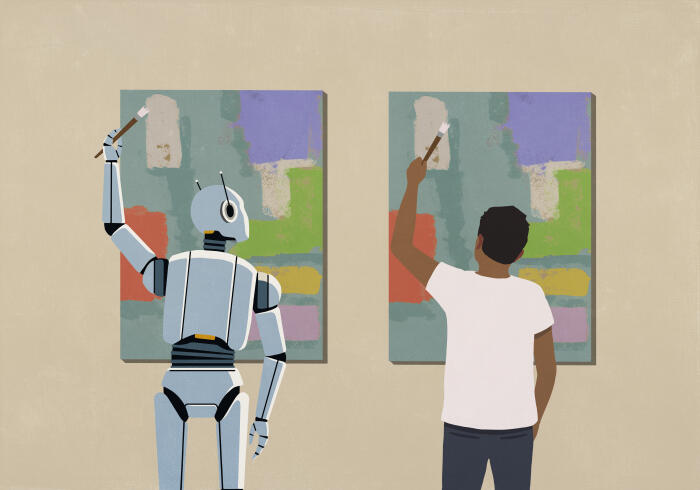
- Explore the twin concept, whether by incorporating literal human twins or abstract visuals that reference mirroring or duplication through movement or repetition.
- Use textures or effects that go beyond the physical, ones that tap into cognitive or emotional dimensions. This can look like, grainy images, extremely detailed visuals, or light work that adds depth to reference the complexity of these systems.
- Don’t be afraid of mixed media, combining photography with CGI, collage, or illustrations can help build complicated, multi‑layered concepts.
As technology evolves rapidly, keeping up can be tough. By leaning into visuals that embrace this new vision of the future, we can build a more compelling path forward.
All article tags
Sources
[1] NTT
Related articles


Learn more about licensing with Getty Images and Stay Inspired!

Connect with our visual experts for more details

Subscribe to our newsletter